skip to main |
skip to sidebar
Congratulations! You’ve cleaned, packed, and staged your home and it’s now on the market. Hopefully, you have worked carefully with a Realtor to properly position your home for maximum appeal and competitive power among the rest of the inventory of homes for sale. So, what now? Well, there are five basic scenarios that could happen.
1 – Multiple Offers. This scenario would be characterized by:
- Lots of showings
- Happens just days after the sign goes up
- Home sells at or above full asking price
2 – Strong Single Offer. The experience for this scenario would be:
- Lots of showings
- Happens within the first 30 days
- Sells at or near full price
3 – The “Norm.” The average time on market in the Savannah area remains around 3 months. Certain neighborhoods with lower inventory are selling more quickly. However, a reasonable scenario would be:
- 8 to 12 showings within the first 45 days
- Offer in line with expectations
- Sells at 95 to 97% of the list price
4 – Feels Like the “Norm.” This is a scenario that begins to feel like trouble.
- Good showing activity
- No offers
- Identification of property problems via showing feedback
- Time to fix problems
- Time to re-consider pricing
5 – Nightmare! Unfortunately, some home sellers will find themselves in a nightmarish scenario.
- No showings. Nothing is happening at all.
- Price problem
- Fix the price and re-position the property
The best advice for sellers is to make sure that the home is property priced and positioned from day 1. If you are considering the sale of your home and want to make sure that you find yourself in one of the first few scenarios, call me!

 People who are fascinated with architectural elements often key in on a single item that draws their attention. Mine is doors. I spend a ridiculous amount of time looking a pictures of doors on Pinterest. They always intrigue me, not just because of the shape or color. More often that not, I just like to create stories about them. For example, this is one of the doors in Savannah that has always been of interest. It’s on Bull and Oglethorpe Streets. Can’t you just imagine a tale of Moors or Ali Baba? Doors can be appreciated like any other art form. It’s all about what you feel when you look at it. Every time I walk by this particular door, I feel like I’m one step away from jumping on a magic carpet and taking a ride to an exotic locale for the afternoon.
 When a buyer makes a home selection, one of the most important tasks to complete during the Due Diligence process is getting a termite inspection. In the Savannah area real estate market, termites are one of the biggest threats to homes. In fact, the heaviest area of termite infestation in the U.S. is the southeastern part of the country. Local Realtors will often say to buyers and sellers, “You’ve either got them, have had them, or you’re going to get them.” Of course, termites are not the only wood destroying organism that can create havoc in the home. That’s why the inspection done to complete a Georgia Wood Infestation Report (otherwise known as a termite letter) requires the termite professional to inspect for dry wood termites, subterranean termites, wood borers like powder post beetles, and wood destroying fungus.
Termites, the biggest culprit, live in colonies and eat 24/7. They don’t like exposure to the light and rarely break through the surface of the wood that is providing the meals. They hollow out the wood and are not always detectable until enough damage is done that the wood actually gives way.
There are some sure signs that a homeowner or buyer can look for:
- Damaged wood
- Dirt termite tunnels
- Small holes in the sheet rock
- Water leaks or water damage around doors and windows or in crawl spaces (the equivalent of ringing the dinner bell)
- Swarming termites (sometimes confused with flying ants)
- Wood in contact with soil, such as around siding, decks, and porches
There are two primary ways to prevent termites. One is to create a chemical barrier between the home and the termite colony in the ground. Crossing the barrier will kill the termites. Another effective method is to install baiting stations in the ground surrounding the home. Regular inspections of the bait stations will reveal any termite activity. If any is detected, then a special bait is inserted which will kill the termites.
In this market, having a termite bond, or warranty, is a critical item to negotiate when buying a property. The bond, which typically costs from $150 – $200 annually, can ensure that annual inspections (at minimum) are performed to check for any signs of infestation. Two types of bonds are available: a treatment bond and a treat & repair bond. They do exactly what it sounds like. If a homeowner has a treatment bond, then the termite company will treat the property at no cost if active termites are discovered during an inspection. The better option is the treat & repair bond, which goes beyond treatment. The termite company will pay for any repairs to the property needed as a result of the termite infestation.
Whether a person is buying or selling, having the proper termite inspection, treatment, and/or bond is critical to protecting the home, and ultimately, the current or future owner’s investment.
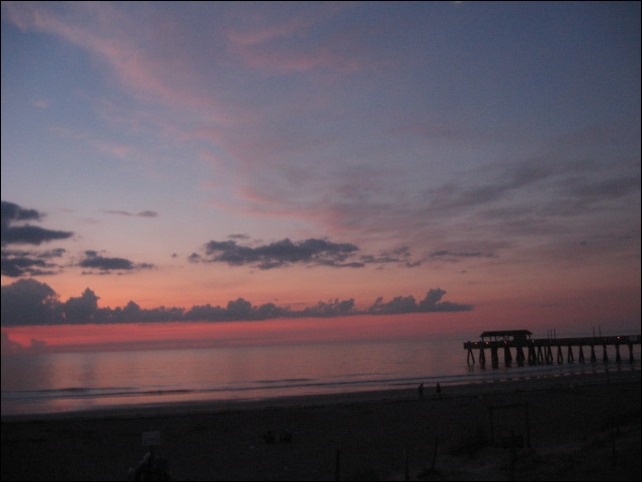
Living on the coast does have its benefits!
Savannah is known for its rich history, educational facilities, great restaurants, and the beach, to name a few traits. One of its most important attributes is status as a military town. We have the honor to be home to Hunter Army Air Field as well as be close neighbors to Fort Stewart just down the road. Soldiers and their families are woven into the fabric of our community. Depending on family size and duration of the assignment, many military members opt to purchase homes in the Savannah area real estate market, using a VA Loan. VA Loans require no down payment, making it a perfect choice for buyers who may have great credit, but a limited stash of cash.
Buyers using VA Loans should be aware of a few basics:
1. A VA loan is available despite bankruptcy or foreclosure. Even borrowers who have had a VA loan foreclosed can still utilize their home loan benefits. This makes the VA loan unique among loan types.
2. They are re-usable. You can use your full VA entitlement over and over again as long as you pay off the loan each time. There will be a slight adjustment in the VA funding fee, but the benefits outweigh the small cost.
3. VA loans are only for certain types of properties. This is the characteristic that typically causes the most confusion, especially over the last few years during which “as is” foreclosures and short sales have represented a high percentage of the “great deal” inventory. VA loans are designed for the purchase of single family homes that are in move-in condition. Buyers wanting a fixer upper are not likely to be able to use this approach. An experienced Realtor can usually walk through a property and determine if it could pass VA standards.
4. They are for primary residences only. VA benefits are not to be used for investment property or a vacation home.
5. VA loans are not issued by the VA. The VA isn’t in the business of issuing home loans. However, a part of a package of benefits available to military members, the VA provides a guaranty on each qualified mortgage loan.
6. They are guaranteed by the government. What is the guaranty? If you have a VA entitlement, the agency guarantees up to a quarter of the loan amount. This gives lenders confidence and helps the military member to secure great terms and interest rates.
7. A VA Loan comes with a mandatory fee. At closing, a VA Funding Fee is charged which can either be paid in full or added to the amount of the mortgage loan and financed. This fee is around 2 percent of the loan amount. It helps the VA keep the benefit program going. The funding fee is waived for military who have service-related disabilities.
8. They have limits on co-borrowers. Some loans allow any co-borrower on the loan, even someone who is not going to live in the home purchased. However, the VA loan program has only two acceptable co-borrowers, a military spouse or another eligible veteran who will live in the home.
9. They don’t have mortgage insurance. Mortgage insurance is a monthly fee rolled into the mortgage payment, included in loans where the buyer does not put at least 20% down payment. For the average home in the Savannah area, the mortgage insurance premium equates to at least $100 of the monthly payment. The VA guaranty eliminates the need for the mortgage insurance premium, increasing the affordability of the home for VA buyers.
10. VA loans do not have pre-payment penalties. Extra payments on the mortgage (which save a ton of interest over the life of the loan) can be made at any time. Making the equivalent of an extra principal payment each year can literally knock 10 years off the loan term.
While it is usually preferred to work with local lenders for VA loan processing, simply because they are easier to get in front of for general communication or problem resolution, many of my military clients have had fantastic experiences with USAA and Veterans United Home Loans. If you are currently serving in the military or have previously served, you may want to consider using the VA loan for your next home purchase. For more information about this loan, lenders, or the home buying process, please contact me.


 Where can a person enjoy the best of the old and new in Savannah? The answer is simple: City Market. The four block area located in the northwest section of Savannah’s Historic District has been a center of commerce since the city’s founding in the 1700’s. Originally, farmers and fishermen sold products there. It was a place to get a haircut, have some blacksmith work done, and catch up on the city’s gossip. Over the centuries, the nature of the commerce has changed, but the draw of City Market as a place to dine, stroll, shop, and be entertained has never been stronger. No visit to Savannah is complete without spending a little time there. City Market is easily accessible from any of the downtown hotels. For those who don’t like walking, transportation is waiting in the form of trolleys, horse-drawn carriages, and pedi-cabs.
A stroll through City Market will tempt visitors with fine art, a good percentage of which is done by local artists. Works include paintings, photographs, sculpture, and one-of-a kind items. In addition, there are gift, candy, clothing, and specialty stores. A wide variety of dining experiences, both casual and fine, are available with indoor and outdoor seating choices. You can even pose with Marilyn while waiting for a table!
City Market is also a hub for entertainment. In the evening, you can sit out in the courtyard, have a beer and some wings, and listen or dance to the tunes of local musicians. For major holidays like St. Patrick’s Day, the area is the center of the city’s “after party.” On Valentine’s Day, you might stumble across a mass Vow Renewal ceremony. There are always surprises in store. It’s definitely a place to see and be seen, Savannah style.


![horse-drawn-carriage[2]](//lh3.ggpht.com/-XA81xx4V-40/UjHwQx4qyTI/AAAAAAAAAjo/xLlKoKjiG7c/horse-drawn-carriage%25255B2%25255D_thumb.jpg?imgmax=800 "horse-drawn-carriage[2]")
If you stopped people on the street and asked about the economy, the majority would probably say that the US economy is improving. However, there are still a good number of folks who remain unemployed or underemployed. Moreover, with the prospect of “Obamacare” on the horizon, many more are fearful that their work hours will be reduced, causing financial strain or full-on crisis. Homeowners facing financial uncertainty experience incredible stress. Often, the stress puts owners in a state of denial, driving inactivity until a point of desperation is reached, typically caused by receipt of bank/mortgage letters that threaten action on delinquent or missing mortgage payments. Still others find themselves in a financial fog due to a job-required relocation, illness or death in the family, or a change in marital status. In this scenario, the homeowner has one stress upon another piled on until he/she reaches the proverbial last straw.
Fortunately, there are options with respect to home selling that can transport a homeowner from “distressed” to “de-stressed.” If selling a home is a key tactic that will help an homeowner regain financial equilibrium, a Realtor can assist in facilitating a Short Sale. A Short Sale allows the borrower to sell his/her home for less than the total amount due on the mortgage loan. Choosing the Short Sale process allows the homeowner to avoid foreclosure and allows the lender to minimize its losses. It is a cooperative process versus a legal resolution (foreclosure or eviction). A Short Sale is usually not considered for homeowners who are not delinquent on payments, unless a major change in financial status is imminent.
There are a variety of documents that will be required, submitted by the Realtor often in a national online system such as Equator, including:
- Hardship Affidavit, noting the reason(s) for the financial issue
- Third Party Authorization, which allows the lender to discuss all aspects of the mortgage with the Realtor
- Verification of the borrower’s income (pay stubs)
- Copies of most recent bank statements
- Copies of most recent tax returns
- Buyer’s Offer to Purchase
- Preliminary settlement statement
The timetable for completing a Short Sale can be considerable. In the Savannah area market, Realtors have experienced up to 3 to 4 months to get a bank decision AFTER an offer to purchase has been submitted. This is down from an average of one year, as recently as three years ago. During this time, the lender will obtain either an appraisal or a Broker’s Price Opinion (BPO) on the property; will evaluate the borrower’s financial documents; and seek authorization to accept the offer from the investor and/or the insurer of the homeowner’s mortgage loan. The good news for the homeowner is that the Realtor coordinates the paperwork, keeps up the continuous dialogue with the lender, and assures that the process is managed properly. In short, the homeowner moves from distressed to de-stressed.
Of course, there are a few caveats:
1) Each potential Short Sales is reviewed on a case by case basis. There is no guarantee that the bank will accept an offer.
2) There may be potential tax implications to the homeowner.
3) The sale of the home must be a “arm’s length” transaction, meaning that it can’t be sold to anyone with close personal ties to the homeowner.
4) The odds of the Short Sale success are reduced if there is a second mortgage or equity line on the property.
5) If the homeowner has sufficient assets, he/she may be required to make a monetary contribution of some of the difference between the net proceeds of the sale and the amount due on the loan.
If you are facing financial difficulties and want to know if you could qualify for a Short Sale, contact me. I will be delighted to be part of the solution to your financial needs.


![horse-drawn-carriage[2]](http://lh6.ggpht.com/-CPOkEtQwEig/UjHwQQN3OSI/AAAAAAAAAjg/0FU_b_lIslc/s1600-h/horse-drawn-carriage%25255B2%25255D%25255B2%25255D.jpg "horse-drawn-carriage[2]")


